
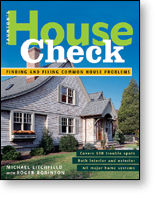

Bubbling paint. Water dripping from light fixtures. Mysterious smells. Groaning pipes and gurgling tubs. Your house is trying to tell you something.  House Check is designed to help you learn what it's saying. With this guide, you can probably figure out quickly what's causing those odd symptoms and what, in a nutshell, you should do to set things right. The information in its charts is based on thousands of houses we've observed, from Vermont to California.
Some house ailments are elusive, even for the pros. If one explanation doesn't pan out, try another. We hope this book works hard for you, but there's no way that it could contain each symptom you might encounter, or state absolutely what the cause is or the remedy will be. Moreover, building codes vary widely, so consult local codes before starting any repairs.
Playing It Safe
If you're unfamiliar or uneasy with some aspects of home inspection, play it safe and call a pro. It will be money well spent. For starters, stay out of flooded basements, electrical service panels, and furnace fireboxes. Always make sure electrical power is off before removing outlet covers or switch plates. If you suspect that you've got lead paint or asbestos, leave it alone and call an abatement specialist. Trying to remove such substances may make them more of a hazard than they presently are. In the charts, hazardous situations are marked with symbols.
Tools
You can do a decent inspection with a handful of common tools. Besides those shown in Fig. 1, here are a few tools you might want to have on hand:
Happy hunting, and let us know how it goes. Your firsthand observations and suggestions for improving House Check are always welcome. Contact us at ://www.housecheckguide.com/ (Web site under construction).
Softcover, 8-1/2 x 11 in., 42 pages, with color photos and drawings
Published 2003, ISBN 1-56158-589-0, # 070707